Monday, October 18, 2010

Is Islamabad losing Parachinar to Kabul?


Opinion Maker 
 

Posted on 18. Oct, 2010 by Raja Mujtaba in Pakistan


"When the leaders are oblivious of their responsibilities, when self projection remains their only concern, the people should act before the countries head towards oblivion." Raja Mujtaba

By Dr Ghayur Ayub

Lord Curzon understood the Pakhtun psyche and separated Pakhtu speaking areas from the domination of Punjab in 1901, creating NWFP. He particularly concentrated on the tribal region and wisely combined the draconian Frontier Crime Regulation (FCR) and military objectives with a softer policy of winning the hearts and minds of the tribal people through development projects pertaining to communication, railways, roads, education and health. His knowledge of the Pakhtun mental make-up surfaced in his Darbar speech, at Shahi Bagh, Peshawar on April, 26, 1903, when he said, "Pathan is a curious mixture. He is a man of war but he is also a born trader. I see him conducting business right away in the Bazzars of Bengal. I have come across him in Burma and Asam." He could have added religion as third element in the mixture.

In recent decades, the Shias of Kurrum agency have suffered on all three counts. It all started when Gen. Zia targeted their religious beliefs by; relocating the Shia Kurrum Militia from Parachinar to other agencies; upsetting a century-old tradition of keeping a Shia officer either as head of Kurrum Militia or as political administration; and having a mixture of Shias and Sunnis in appointments of subordinate administrative staff of APA, Tehsildar and Naib Tehsildar. His policy went against the local Shias and when the Taliban took over in Afghanistan, the situation got deplorably worse for them.

After the Taliban defeat in 2001, a large number of them along with Al-Qaeda members fled to the tribal areas settling among other places, in regions around the Shia dominated upper Kurrum. As a result, their defeat in Afghanistan became a flashpoint for Shia miseries. The religious oppression of Shias multiplied manifold when, five years ago, they blocked the only road that connects Parachinar with Tal-the first town in the settled area. It adversely affected Shia trade and commerce downgrading their social life and strangulating their livelihood. As a consequence they found it difficult to safeguard their families, find jobs, decent food and sometimes even medicine.

A glaring example was that of Sarwan Ali from village Malana, who shot himself because he could not get food and medicine for his ailing wife. Or a young mother in her early twenties from village Alamsher, who was fatally wounded in her home, holding her baby in her arms, by a splinter of mortar shell fired by Taliban from a nearby hilltop. Bombing, shelling,shooting, killing and living in a constant state of fear, anguish and disappointment has become routine. Ironically, for their daily essentials they cross the border to Afghanistan; and when they want to visit their relatives and friends in Pakistan they travel through Afghanistan and re-enter their own country at Torkham. Can things be more pathetic than this? For them, the Afghan government is friendlier than Pakistan's; thanks to the failure of political administration to redress their grievances and control the Taliban's brutal onslaught. When an angry local Shia was asked, which country was safer to live in; Pakistan or Afghanistan? He replied in an argumentative query, "Just look around and you tell me?" He had lost two sons, when, one night, the Taliban left their beheaded and mutilated bodies at his doorstep. The valley is full of such grieving Shias.

The unbearably harsh life is reaching an explosive point, leaving them with two options; either to migrate or fight back. They have opted for the second. For that, they need possible support from Iran, Hezbollah, Afghanistan or even the Americans. Material help from the latter two seems logical because of easy access. They can see new venues of hope through Khost, Paktia and Nangarhar after being regularly attacked at Tor Ghar near Tal, Doaba near Hangu and Japanese tunnel near Kohat. In frustration, some have started thinking to react the way certain rebellious Baloch have reacted with one difference; the Shias understand that Kurrum cannot survive independently. So they have looked back at history and have found two incidents they can get guidance from.

  1. First; in the early 20th century, the Sunnis created a deplorable situation for the Shia population identical to the one seen today. The grand Khan of Turi Duperzai, Noor Khan (alias Dur Khan) wrote to the Deputy Commissioner of Kohat on behalf of the Shia elders, inviting the British government to Kurrum agency to safeguard the Shia population. The British accepted the invitation by appointing a political agent at Parachinar. That's how the massacre of Shias was stopped.
  2. Second; a treaty known as Durand Line Agreement was signed on November 12, 1893, between Amir Abdur Rahman Khan and Sir Henry Mortimer Durand creating a buffer zone between British India and Afghanistan. The signed treaty was in English-a language the Amir couldn't read or understand. The translated portions in Dari and Pakhtu were not signed by the Amir. According to historians, the Pakhtun elders close to the Amir were not aware of the written agreement. They thought the treaty was according to an unwritten Jirga practised in those days.

This brings up an important point of the time frame of the pact which remains ambiguous till the present day. Maybe the treaty was actually in two parts; a written part according to the British legal requirement signed by the Amir; and an unwritten part called 'Tiga' according to the requirement of the Jirga System. 'Tiga' in the Jirga system is like a seal between the two participating parties and is time bound. Was a hundred year limit part of 'Tiga'? The Pakhtun elders then and in the following decades believed so. And this could be the reason that successive governments in Afghanistan, including the very friendly Taliban of Mullah Omar, took a firm stand on this issue. They have consistently disregarded certifications by SEATO and SENTO which supported Pakistan's version, by arguing that Afghanistan was not made party during the dialogues, and that those two bodies are dead and buried. They also argue; that how can a treaty of such a nature and magnitude be agreed upon without a time-frame. The issue has not reached the United Nations thus far, and the US and UK both ignore it because it can affect their war strategy in Afghanistan.

Some frustrated Shias share Afghanistan's version and consider the DLA as null and void since 1993, thus making Kurum part of Afghanistan. When asked what if the Taliban got back to power in Afghanistan, they reply they will cross that bridge when they come to it; so strong are their feelings. According to them things have changed since 9/11.They conducted a private survey, amongst 500 Shias aged between 20 and 65, (its authenticity cannot be verified) which gives opposite figures to the one given by another public survey conducted by the New America Foundation and Terror Free Tomorrow, which stated "Nearly nine out every ten people in FATA oppose the U.S. military pursuing al-Qaeda and the Taliban in their region." The local survey showed that 99% are against Taliban and Al-Qaeda; 70% are disappointed by the role played by the Sunni led Pak army in Kurum; 85% are against the existing political set-up in Kurrum; 45% are ready to take up arms against the Pak army.

Irrespective of the survey being authentic or not, a strong lobby is surfacing especially amongst the youth who blame Pakistan for their miseries. They want to safeguard their livelihoods, bring safety to their families, put trade back on track, achieve an atmosphere of peaceful existence, and most importantly have freedom of religious beliefs. They are ready to take up arms in Hezbollah style to achieve those aims.

The American administration must closely be watching the situation in Kurum in the context of their non-productive military actions in FATA and non-implementation of Reconstruction Opportunity Zones (ROZ) policy in the region. Obama is desperate to show the American people that he can crush Al-Qaeda and the Taliban in FATA and help the locals economically. Upper Kurrum could turn out to be his dream come true if it becomes a launching pad to achieve those aims. Its location bordering Afghanistan from three sides and with direct land-linkage with the three important FATA regions of North Waziristan, Aurakzai and Khyber makes it ideal to fight his worst enemy from within FATA. If the local Shias are willing to participate; why shouldn't he take advantage of the opportunity and offer material help to the trained fighters against Al-Qaeda and Taliban?

Before it turns into a reality, Pakistan should seriously think of taking the following reconciliatory steps;

  • Take the Shia population, especially the youth, in confidence and show them in real terms that the government is willing to help take them out of their miseries.
  • Construct a second road along the south bank of Mar Toi (Kurrum river) bypassing the strongholds of Taliban dominated regions at Sadda and beyond, thus opening communication and trade links with the rest of Pakistan
  • Undo what Gen Zia did, by reintroducing the century-old system of power sharing between Shia and Sunni officers in civil and military bureaucracy in Parachinar.
  • Bring back the HQ of Kurrum Militia to Parachinar and build it afresh by inducting both Sunnis and Shias in its ranks and files.

Otherwise, the Pakistani leadership should open its eyes and read the writing on the wall which says; Islamabad is fast losing Parachinar to Kabul.


http://www.opinion-maker.org/2010/10/is-islamabad-losing-parachinar-to-kabul/


Tuesday, August 3, 2010

Isolated Pakistani region faces humanitarian crisis


Title Officials: Isolated Pakistani region faces humanitarian crisis
Publisher Radio Free Europe/Radio Liberty
Country Pakistan
Publication Date 13 July 2010
Cite as Radio Free Europe/Radio Liberty, Officials: Isolated Pakistani region faces humanitarian crisis, 13 July 2010, available at: http://www.unhcr. org/refworld/ docid/4c56d2a0c. html [accessed 3 August 2010]

Officials: Isolated Pakistani region faces humanitarian crisis

July 13, 2010

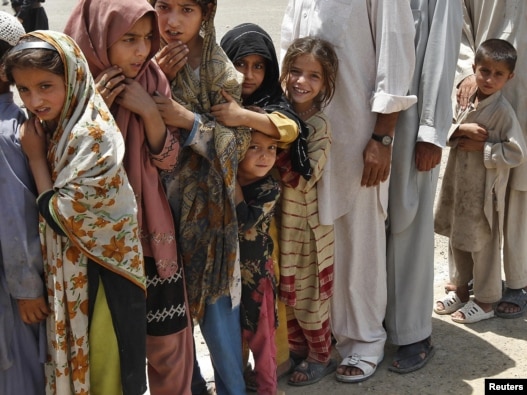
Children stand in line at a distribution center in Kurram.Children stand in line at a distribution center in Kurram.

The security and humanitarian situation in Pakistan's Kurram region has deteriorated significantly, local leaders and analysts told RFE/RL's Radio Mashaal.

Kurram Agency, on the Afghan border, is one of Pakistan's seven tribal agencies.

I.A. Rehman, the chairman of Pakistan's Human Rights Commission, says that people in Kurram Agency are facing a humanitarian crisis.

Jawad Hussain, a member of the National Assembly from Kurram, says the region has been cut off from the rest of the country for the last three years. He says various Taliban groups dominate the main route between Thal and Parachinar, which in turn connects Kurram with Pakistan's main urban centers.

"Our people are forced to travel through the hard and mountainous regions of Afghanistan to reach the cities of Peshawar and Islamabad of Pakistan," Hussain says. "It takes 24-27 hours instead of six hours' travel between Thal and Parachinar. The local residents [face] really dismal conditions, but no one pays attention to it."

Last week, unidentified gunmen opened fire on a bus carrying passengers from Parachinar to the provincial capital of Peshawar. The attack, in Afghanistan' s Pakthia Province, left 13 people dead and two injured.

Afghan officials have said those killed were Afghan refugees running small businesses in Kurram.

Zulfiqar Ali, a resident of the area who works as a reporter in Peshawar, says the deadly incident makes it even less likely that Kurram residents will travel the alternative Afghan route.

Ali was among a delegation of journalists who visited Kurram on a trip sponsored by Pakistan's military. He says that he witnessed local residents suffering from lack of food and medicine. "People in [the Kurram town of] Sadda looked like they [were] prisoners," Ali says.

The humanitarian group Doctors Without Borders said in a recent report that it has become extremely difficult to provide relief to the sick in Kurram. It noted that medical supplies are becoming increasingly scarce and even hospitals have been attacked.

Pakistan's military sends food and medicines twice a month. However, locals say that is not sufficient for the area's more than half a million inhabitants.

While the situation in Kurram has further deteriorated in recent years, the agency has been riven by militant and religious strife since the "Afghan Jihad" of the 1980s. Kurram lies on the border with Afghanistan and the Taliban bastion of Pakistan's North Waziristan.

In recent years, it has also been the site of clashes between Shi'ite and Sunni sects of Islam. Officials say at least 3,000 people have been killed in such religious violence since 2007.

Recent fighting between Taliban militants and Pakistan security forces in the area has also displaced thousands of Kurram's inhabitants.


Link to original story on RFE/RL website


Topics: Security situation,

Copyright notice: Copyright (c) 2007-2009. RFE/RL, Inc. Reprinted with the permission of Radio Free Europe/Radio Liberty, 1201 Connecticut Ave., N.W. Washington DC 20036

sources: 1. http://www.rferl. org/content/ Officials_ Isolated_ Pakistani_ Region_Faces_ Humanitarian_ Crisis/2098366. html
2. http://www.unhcr. org/refworld/ docid/4c56d2a0c. html

__,_._,___

Sunday, August 1, 2010

Divided on sectarian lines

DAWN.COM
Divided on sectarian lines
  
Friday, 30 Jul, 2010
KURRAM Agency is passing through critical stage. Divided on sectarian lines, Sunnis have been segregated from Shia population. The most dangerous aspect is that the paramilitary forces, levies and administrative staffs operating in the area have also been divided on the same grounds, making the sectarian divide more complex. The situation is similar to that of Beirut, Lebanon where population was divided on sectarian ground through Green Line in mid 1970s. 

Uncertainty and confusion haunt the region. The 40-minute flight of a chartered Cessna-414 aircraft from Peshawar to Parachinar is quite turbulent as it crosses the lofty mountain ranges wrapped in a misty haze.

Travelling by road to Kurram from Kohat has become impossible for half a million people and their extended families living in other cities and abroad. The Kurram tribesmen had been taking a detour to Afghanistan to travel to their native areas for the last three years. But the detour has also become unsafe for the people as they feel scared after the killing of 14 passengers in Paktia province of Afghanistan. Insecurity has forced residents of the detached Kurram to use luxurious means of air transportation.

Cessna planes are the only means of transportation for Kurram people. Five companies based in Karachi, Lahore and Peshawar are making their fortunes in the conflict-hit area by providing chartered service to the local population and an average of 100 passengers fly between Peshawar and Parachinar daily.

The Parachinar Airport built by the Army 18 Engineer Battalion during Soviet Union invasion of Afghanistan in 1986 is without basic facilities like wind socks, meteorological office and fire fighting equipment. Pilots have to land and take off at their own risk.

Interestingly a cop of the Kurram Levies Force performs as aircraft marshal providing hand signals to the cabin crews for taxiing and parking of the aircraft. 

The departure and arrival lounge looks like a mini PPP secretariat as it has been adorned with party's tri-coloured flag and portraits of their assassinated leader. PPP jiyalas have named the airport after Benazir Bhutto. 

The twin-engine aircraft has a total capacity of eight persons including two crew members, but nine persons including two kids are stuffed into the plane at Peshawar International Airport and safety rules are breached for extorting money. 

During a flight to Parachinar, I saw an eight-year-old child stood along the crews' seats during flight while another passenger despite paying full fare (Rs8,700) was sitting on the floor. There is no other way out for these helpless people to avoid this exploitation.

People used to travel in buses and trains, but never saw passengers traveling in the aircraft without being provided seats. After a few minutes flight from Peshawar, the minor became dizzy and a God-fearing passenger accommodated him on his seat. 

Parachinar, the administrative headquarters, was a peaceful cosmopolitan town housing 40,000 inhabitants of different ethnic and religious backgrounds. Muslims, Christians, Hindus, Ahmadis, Sikh, Punjabi, and Dari speaking Hazaras were living side by side peacefully. There was tolerance among the different communities.

Churches and temples still exist there. But after three years I found people of this secluded valley completely different. Hatred has replaced tolerance. Violence has caused widespread destruction. Several settlements have turned into ghost towns. This prolonged conflict has changed the demographic structure and social fabric of the area.

About 50 hamlets of houses have been destroyed and more than 3,000 people have been killed in clashes. One can see red and black flags on the graves of those people who have fallen prey to the violence. The bullet marks on the buildings and damaged infrastructure shows the intensity of the fighting that raged in November 2007. It seems that two regular armies had fought pitched battles in the area.

The area has been divided on sectarian lines. People belonging Shia and Sunni communities cannot enter each other's areas. In some areas of the agency the Taliban's writ still prevails. Rival groups have constructed concrete bunkers. Even anti-personnel mines have been laid in some of the areas around the villages, making life more dangerous.

The lame duck political administration and other stakeholders have focused on accumulating wealth through cross border smuggling and escorting food convoys from Thall to Parachinar. Lower parts of the Kurram adjacent to North Waziristan Agency have become smuggling hubs. On the other hand, the federal government has adopted meaningful silence over the deteriorating situation in Kurram. 

The political administration and law enforcement agencies have lost confidence of the local population. People in upper and lower Kurram have set up peace committees. Volunteers are checking vehicles on the main roads. Interestingly, Afghans and other outsiders frequently visit Parachinar and roam freely in the area.

The crisis in the agency, local residents said hadn't been truly reflected in the media reports churning out since 2007 as they argue that the crisis is not of sectarian nature, as being projected in the media. They blamed government, Taliban phenomenon and the 'new great game' for chaos in the area.

Official statements had also stated that "third party" was behind the crisis in the strategically important region. But "third party" has not been named so far. Whatever is the reason, but one thing is clear that the conflict has been imposed on the people of Kurram from outside. Certainly this is state's responsibility to pull people out of the crisis.


source: http://www.dawn.com/wps/wcm/connect/dawn-content-library/dawn/the-newspaper/local/peshawar/divided-on-sectarian-lines-070


Visit

www.parachinar616.blogspot.com

http://parachinar616.wordpress.com/


or join


Saturday, July 31, 2010

Reopening of Parachinar Road demanded

Reopening of Parachinar Road demanded
Bureau Report
Thursday, 29 Jul, 2010
PESHAWAR, July 28: The residents of Kurram Agency have expressed grave concern over the closure of Parachinar Road for the past some years and demanded of the government to reopen it and provide protection to the people.

Speaking at a press conference at Peshawar Press Club on Wednesday Pakistan People's Party, Kurram Agency, president Dr Syed Riaz Hussain Shah said that the residents of the region were facing serious problems due to inaccessibility through the main road and had to come to Peshawar via Afghanistan.

He said that on July 17 unidentified persons had fired at the passenger van and killed innocent people including women and children and also kidnapped six of the people who were still missing.

He rejected the reports that ethnic violence had disturbed the area saying that there was no ethnic issue as both Sunni and Shiites had very good relations and peace bodies were very active in case of any problem.

source: http://beta.dawn.com/wps/wcm/connect/dawn-content-library/dawn/the-newspaper/local/peshawar/reopening-of-parachinar-road-demanded-970
 

Visit

www.parachinar616.blogspot.com

http://parachinar616.wordpress.com/


or join


Train march leaves for Islamabad

 Train march leaves for Islamabad
Saturday, July 31, 2010
By By our correspondent
Karachi

The Wahadat Train March of Majlis-e-Wahdate Muslimeen (MWM) on Friday departed from Karachi Cantt Station to attend the Central Wahadat-e-Millat Convention of MWM to be held on August 1 at Islamabad to express solidarity with the people of Kurram Agency, Quetta, DI Khan and Karachi, who are suffering incidents of target killing.

Addressing the marchers at the Cantt Station platform, MWM Central leader Maulana Sajjad Rizvi, Allama Salman Hussaini and Mohammad Mehdi said that the United States, Israel, India and their agents had been involved in the ongoing terrorism acts, including suicide bombing and target killing incidents, in the country.

They demanded of the government to arrest the terrorists and those patronising the Data Darbar, Nishtar Park, Ashura and Chehlum-e-Imam Hussain (AS) incidents.

He said that the government had failed to arrest the terrorists involved in the target killings of people belonging from the Shia and Beralvi sects.


Visit

www.parachinar616.blogspot.com

http://parachinar616.wordpress.com/


or join


10 killed in sectarian clashes in Kurram

Daily Times

10 killed in sectarian clashes in Kurram

Staff Report

HANGU: Ten people were killed and their houses torched in sectarian violence in Kurram Agency on Thursday.

According to local residents, men of the Shia sect carried out the attack. The incident occurred in the Sanghbakht village inhabited by the Mengal tribe near the Afghan border, local residents told Daily Times on condition of anonymity. Mengal tribesman are predominantly Sunni and live on both sides of the Pak-Afghan border.

"They (attackers) first evicted the residents from their homes, ransacked them and killed 10 people on the spot," the residents said adding that the attack could be retaliation for the attack on a convoy of Shias a couple of days ago in which a number of people were killed.

Parachinar and other towns of Kurram had been witnessing sectarian violence since a long time and the Taliban used the tense relations between Sunnis and Shias to strengthen their presence in the area. Local residents said that four women and two children were missing in the aftermath of the attack. The attack could not be officially confirmed by government sources.

Visit

www.parachinar616.blogspot.com

http://parachinar616.wordpress.com/


or join


Kurram admin, militia blamed for lawlessness

 
Kurram admin, militia blamed for lawlessness

Thursday, July 29, 2010
Bureau report

PESHAWAR: Pakistan People's Party (PPP) Kurram Agency President Dr Syed Riaz Hussain Shah Wednesday condemned the local administration and Kurram Militia for their indifferent attitude towards brutal killing of 18 persons on July 17 and kidnapping of another six persons.

Speaking at a press conference here, he said that Kurram Agency was faced with deteriorating law and order. He said that scores of innocent people including six women were killed and several others kidnapped for ransom. However the authorities did not take any action, he alleged.

The PPP leader said that provision of security to citizens was the responsibility of the state, but it had failed to fulfill its job. He asked the government to suspend or transfer the incompetent Kurram Militia personnel because they were incompetent.

Dr Riaz said that on the one hand the commandant of Kurram Militia claimed that Peshawar-Parachinar Road had been made safe for the motorists and passengers but on the other hand the miscreants attacked the vehicles carrying Shia passengers.

He said the Khyber Pakhtunkhwa governor had repeatedly said that peace would be established in the area soon and the roads be made secure but nothing was done in this regard. He asked the governor, prime minister and the president to take notice of the recent terror incident and order an inquiry against the incompetent local officers.

SourCe: http://www.thenews.com.pk/daily_detail.asp?id=253472


Visit

www.parachinar616.blogspot.com

http://parachinar616.wordpress.com/
 

or join


Unite from Parachinar to Karachi

Scenic Parachinar belies an undeclared human rights free zone where they have no legal protection.

Scenic Parachinar belies an undeclared human rights free zone where they have no legal protection.

Years ago, when in my hometown Parachinar and in other tribal areas, malicious actions were initiated by inhuman terrorists against innocent and peace-loving people, I had written an article titled "Let think for Pakistan". At the time, I hadn't imagined that this article would be momentous and significant even years later. But unfortunately, today Pakistan is confronted with more miserable conditions than before.

We are in a quagmire of socio-economic and security problems set against a backdrop of ethnic and religious intolerance. From Parachinar to Karachi, the lives of human beings are at great risk. The terrorists have pushed Pakistan into a blind street where only political reconciliation, wisdom and unity with persistence in fighting terrorism can prove beneficial. Fortification through diplomatic wisdom has never been as pressing a need for Pakistan as it is today. There were no uncertainties that the allies of the "War on Terror" would fail and this would hurl Pakistan into a political mire.

I had told the government of that time that a spark of terrorism from the tribal areas could overtake the whole country soon if fierce action combined with wise strategy was not adopted against the miscreants in disparity to the strategy of combating USSR as we had a most terrible experience of the so-called Jihad against USSR.

Had the think tanks inside Pakistan chalked out a wise strategy with future planning, today there would have been no adverse impact on our society. At present, "War on Terror" has turned Pakistani streets into a breeding ground of terrorism. Terrorists got their strength in the worst days of dictatorship when public will, country constitution and state institutions had been rendered worthless and those who mattered in the country were busy in salvaging the one-man illicit regime. Today the entire nation is paying a heavy price for the dirt spread by two oppressors Zia-ul Haq and Musharraf.

Today tribal areas are breeding grounds of terrorism; life of mankind is hellish there due to the presence of terrorists in their soil. But, Tribesmen are braver and more spirited than the government of Punjab in challenging and condemning terrorists and terrorism. No tribesman nowadays has a soft corner for terrorists and no tribesman is convinced by their propaganda that they are doing everything for the well-being of Islam. Shoulder to shoulder with Pakistan Army, they are fighting against the terrorists.

Millions of Pakistanis in Parachinar - the upper part of Kurram Agency – live in a human rights free zone where they have no legal protection are subject to abuses by the Taliban on Thal-Parachinar Road. Millions of people are effectively living under the Taliban in lower part of Kurram Agency, Hangu and adjacent areas of the Thal-Parachinar Road.

On July 17, 2010 19 innocent passengers from Parachinar including 9 women have been brutally killed by terrorists on this road near Hangu. Hitherto more than 250 men, women and children are gun downed very maliciously on this road by Taliban.

Earlier to this incident, 106 tribesmen killed in a suicide bomb blast in Mohmand Agency outside Agency Political Agency office and many killed in a suicide blast in Mingora Swat. A non-stop genocide war against the poor, oppressed and ill-fated tribesmen has continued over a decade.

Let us take some obligatory and immediate steps for saving Pakistan and making it a peaceful part of the globe by uprooting extremism, targeting sources of terrorism, fierce actions against banned organizations, condemning those political powers abetting banned organizations and giving up any double games over the issue of terrorism and extremism.

Tribesmen want severe measures against the miscreants and criminals who have unlawfully captured their earthly paradise and made their lives miserable. Tribal people will remain steadfast in ridding their home towns of the enemies of humanity.


Friday, July 9, 2010

Three Years Parachinar

Three Years Parachinar

By Jabir Hussain Turi

08 July, 2010

Kurram agency was not only famous for of its scenic beauty and pacifist people, but it also stood out from rest of the tribal areas of Pakistan for its peace and the loyal people who always contributed for the prosperity of Pakistan. The residents of this region never imagined that one day they would be forced to leave their academic and religious books and carry tools of self defense and war. A place which was once quoted as a glimpse of heaven turned into a war ground. Go back 3 years into the past of this region and you will know about the situations and elements which brought the inevitable war. Thousands of people lost their precious lives and many more became homeless. The lively neighborhoods, became graveyards

If you could look back into the history of this region you will come to know that incidents of this nature occurred very rarely, as the Traditional Jirga (court/justice) System (comprised of tribal elders) always keenly took care of such matters. And the local administration also used to play a substantial role to exterminate elements that caused such. In past few years the peace situation of Pakistan has been seriously disturbed and its waves have propagated and found its way to the Kurram Agency. How? Well the radical elements came and hid themselves in the areas situated along the way to kurram agency and as a result this not only disturbed the peace situation in Parachinar but also separated this region from rest of the country, as the roads were permanently blocked, the people of this region started to live in isolation. They became aliens in their own country, moreover the people of Parachinar were forced to use the Afghanistan route for traveling to Pakistan and to get daily use commodities. How often do you get to hear about people having to travel to different countries first in order to travel to another place in their country? Inflation reached its peak, people got poorer, food and medicines became expensive, and the lives of the people became more and more miserable. In addition, scarcity of medical supplies also led its way to the hospitals. Hospitals ran out of basic instruments and medication. Furthermore, country's health department also put this region on the ignore and discriminate list, and it s on that list for the last 3 years, and the failure to rectify the medical problems of Kurram Agency is a testament of the government's ignoring attitude. It has been three years now, and the circumstances are getting much worse.

Much to agency's chagrin, the future of KURRAM Agency has been devastated as the children and youth of this region with willingness to study, can't get proper education. Lack of academic institutions and staff is leading the future of the youth towards a dead end. There is not a single person, group or a company who would want to render their services in this region because they are worried about their lives becoming vulnerable to unreliable situations, leaving schools, hospitals, public institutes and offices deserted. The financially lower classed families are the ones who have suffered the most and worst from this miserable situation, particularly those people who worked on daily wages. Most government services have bowed downed to the financial crisis due to the unavailability of funds. And the servants of the government departments working in Kurram agency have been deprived of their salaries for the last 2 years.

The government doesn't want to pull the wool over the issue and in order to hide its failure in peace making, it is declaring these issues as sectarian conflicts. The unwillingness of the political agent to face the media or to bring it to the front is more than enough to elucidate their failure. These critical situations are giving birth to a galore of crisis and issues, all can't be elaborated here but the most crucial issues are briefly discussed below.

• Due to the blockage of the only domestic route connecting to rest of the country, the people of Kurram agency got isolated from their own Pakistan.

• By using the international Afghanistan route the students, labours and the residents of other cities and countries faced a lot of troubles such as insecurity.

• The residents were and still are deprived of fool and medical supplies.

• The scarcity of staff and facilities in health, education and other depts. ruined many lives.

• The economic situation is completely destroyed as people were forced to buy basic necessities at an extremely high cost.

• Absence of telecommunication services pushed the people farther away back in time.

• It is sad to mention that in last three years, more than a thousand families were forced to leave their homes and move to other parts of the country, still there was and still no one who could hear their plea. The same people who proved their love for their country time and time again.

• The banks remain out of cash and post offices have stopped functioning. As a result the mailing service is ceased and everyone faces difficulties in sending and receiving drafts, credentials and necessary documents.

• Torr Ghar (Black Mountain) is becoming a hot zone, as most of the conflicts are initiated due to this land mark. The reason being, the political agencies and district administrations vilify it and don't want to accept its possession because it is gradually becoming a safe haven for terrorists and extremist elements.

• Day by day killings and abduction give birth to more and more tragedies. The people are psychologically depressed and have lost their meaning and purpose of life. Many are finding suicide as an easy way out (I must mention that by suicide I do not mean suicide bombing).

• There is no representation of FATA in the provincial assembly and the reinstatement of two MNAs in National assembly is something of no use as they show their keen concern on federal issues and are completely blind to their regional issues. These so called Members of National Assemble have muted their hearts and mouths towards resolving the matters of this affected region. One of them is parliamentary leader (Munir Orakzai).

• Still the media, which was supposed to be the only channel for conveying the cries of the affectees to the world is not giving it a proper coverage despite the circumstances of the people of this region have reached their worst.

• In 2008 a peace pact was signed and passed in Murree between the Government and leaders of opposition parties of the affected region. Despite the unanimous agreement on this peace resolution from both the parties, the government has once again failed to implement it. The point of concern is that both parties want to implement this pact but the Government hesitates to execute this mutual agreement.

Imagine a geographically significant part of Pakistan being left out like that! People were not even able to buy daily use commodities, the government overlooked the people of our region. May be they had something more important to take care of first, like planning load shedding schedules, settling their issues with the judiciary or maybe supporting the N-R-O. The children and the adults of this region have one question, which they want the Government to answer, is this what we deserve in return for our loyalty and patriotism? Are you going to let the conflicts consume innocent lives, till the whole region is colored red with blood?


source: http://www.countercurrents.org/turi080710.htm


Visit

www.parachinar616.blogspot.com

http://parachinar616.wordpress.com/