Thursday, March 3, 2011

Four injured in Hangu explosion


Thursday, March 03, 2011
 
HANGU: Four persons, including a woman and a minor, were injured when a coach was attacked with an improvised explosive device (IED) in Mamo Khwar area in Thall Tehsil on Wednesday, official sources said.

Talking to reporters, Deputy Superintendent of Police, Mir Chaman Khan, said the passenger coach (PR-2976) was on way to Peshawar from Parachinar, the headquarters of Kurram Agency, when the blast took place.

Four passengers, including Ali Raza and his daughter Shumaila, were injured. The injured were rushed to the Combined Military Hospital and a private hospital in Thall town where the condition of the woman was stated to be critical. The Thall-Parachinar Road was opened to traffic last month after a peace accord was signed between the elders of Sunni and Shia sects in Kurram Agency.


SOURCE:  http://www.thenews.com.pk/TodaysPrintDetail.aspx?ID=34103&Cat=2&dt=3/3/2011


Wednesday, March 2, 2011

Kurram Agency to get Rs1 bn: Gilani


Wednesday, March 02, 2011
 
ISLAMABAD: Prime Minister Syed Yousuf Raza Gilani announced rupees one billion in the current budget and Rs700 million in the next year's budget for the rehabilitation of around 32,000 affected people of the Kurram Agency who had to leave their homes because of sectarian riots and militancy.

The prime minister made this announcement while addressing the members of the Grand Jirga from the Kurram Agency at the PM House here on Tuesday. He lauded the efforts of the senators, MNAs, elders, member of the Jirga, ministers and officials in bringing about peace in the Kurram Agency which helped the people to return to their homes.

The prime minister stressed that the amount allocated for the purpose of rehabilitation and welfare of the affected people must be spent in the most transparent manner, so that everybody who had suffered during the last four years may benefit from the compensation.

The premier also announced to give special certificates of appreciation to all the members of the Grand Jirga of Kurram Agency for their contribution towards restoring peace and harmony in the area.

Prime Minister Gilani said that the elders and the people of Kurram Agency had set an example for the other agencies of Fata that through dialogue and discussion the issues could be solved and peace could be restored. 

He stressed upon the elders to identify the miscreants and foreign elements in their respective areas so that such people can be brought to book. Earlier the Governor of Khyber Pakhtunkwa Barrister Masud Kausar while addressing on the occasion said that he had observed that the leadership at the federal level is fully committed for the betterment of the people of the province, particularly the Fata region. "The process of interaction and dialogue should continue as it helps to create better understanding. The success of dialogue process in Kurram Agency should encourage the elders and people of other agencies to follow suit and help bring prosperity and development in their areas."

The Minister for Law, Justice and Parliamentary Affairs Dr Babar Awan while addressing the Jirga said that the people of Kurram deserved special appreciation for setting an example for the entire Fata region. 

Interior Minister Rehman A Malik said on the occasion that by bringing harmony and peace among various sects of religion the people of Kurram Agency had set an example for all the people of the country.

Haji Munir Khan Orakzai, MNA and members of the Grand Jirga of Kurram Agency thanked the prime minister for his support and guidance in bringing about peace in the Kurram Agency.

The sectarian tension and militancy, which started in April 2007, they said, has finally ended after the successful implementation of Murree Agreement reached-at in February 2010. "The roads and markets have now been opened and life has returned to normal. The people have almost returned to their homes, they said, but require support for rehabilitation," he added.


PM announces Rs 1.7bn for Kurram Agency rehab

Daily Times

PM announces Rs 1.7bn for Kurram Agency

* Gilani meets grand jirga members, lauds their support for achieving peace in agency

Wednesday, March 02, 2011 


ISLAMABAD: Prime Minister Yousaf Raza Gilani on Tuesday announced Rs 1 billion in the current budget and Rs 700 million in the next year's budget for rehabilitation of around 32 thousand residents of the Kurram Agency who left their homes due to sectarian riots and militancy. 

Addressing grand jirga members from the Kurram Agency at the PM's house, the PM lauded the joint efforts by senators, MNAs, tribal elders, jirga members, ministers and officials in bringing peace in the agency that has helped the people to return to their homes. 

Gilani stressed that the amount allocated for the purpose of rehabilitation and welfare of the affected people must be spent in the "most transparent manner, so that everybody who had suffered during the last four years may benefit from the compensation". 

He also announced special certificates of appreciation to all grand jirga members for their contribution for restoring peace and harmony in the area. He said the elders and the people of the Kurram Agency had set an example for other FATA agencies that through dialogue and discussion issues could be solved and peace can be restored. Gilani stressed upon the elders to identify miscreants and foreign elements in their respective areas so that such people could be brought to book. Such elements, he added, were distorting the image of Islam and the country. 

The prime minister said that the basic objective of the government's 3Ds policy was to establish peace and work for the betterment of the people. 

Gilnai said a challenge to the writ of the government would not be acceptable, adding that the government was responsible for development of FATA region and all possible measures would be undertaken to bring these areas at par with other areas of the country.

The prime minister said that the people of Khyber Pakhtunkhwa and FATA had made great sacrifices for the country in the war against terrorism, which was duly recognised by the country. The people of KP and FATA, he added, had played great role in the creation of Pakistan, defending the western frontiers as well as in the struggle for restoration of democracy. 

Earlier, KP governor while speaking on the occasion said he had observed that the leadership at the federal level was fully committed to the betterment of the people of the province, particularly the FATA region. The process of interaction and dialogue, he mentioned, should continue as it helped to create better understanding.


SOURCE: 

http://www.dailytimes.com.pk/default.asp?page=2011\03\02\story_2-3-2011_pg7_19

Visit

www.parachinar616.blogspot.com


Tuesday, March 1, 2011

PM announces Rs. 1.7 bn for rehabilitation of people in Kurram Agency


Tuesday, 01 March 2011
PM announces Rs. 1.7 bn for rehabilitation of people in Kurram Agency


ISLAMABAD, Mar 1 (APP): Prime Minister Syed Yusuf Raza Gilani on Tuesday announced Rs one billion in the current budget and Rs. 700 million in the next year's budget for the rehabilitation of 32,000 affected people of Kurram Agency, who had to leave their homes because of secretarian riots and militancy.He lauded the efforts of Senators, members of the National Assembly, elders, members of the Jirga, ministers and officials in bringing about peace in the Kurram Agency which helped the people to return to their homes.The Prime Minister made this announcement while addressing the members of the Grand Jirga from the Kurram Agency at the Prime Minister House here.

The Prime Minister stressed that the amount allocated for the purpose of rehabilitation and welfare of the affected people must be spent in the most transparent manner, so that everybody, who had suffered during the last four years, may benefit from the compensation. 
He also announced to give special certificates of appreciation to all the members of the Grand Jirga of Kurram Agency for their contribution towards restoring peace and harmony in the area.
The Prime Minister said that the elders and people of Kurram Agency had set an example for the other agencies of the Federally Administered Tribal Areas (FATA) that through dialogue and discussion, issues can be solved and peace restored. 
He stressed upon the elders to identify the miscreants and foreign elements in their respective areas so that such people could be brought to book. Such elements, he added, were distorting the image of Islam and the country.
The Prime Minister said that the basic objective of the government's 3Ds policy was to establish peace and work for the betterment of the people. 
He, however, mentioned that the challenge to the writ of the government would not be accepted. He assured that the government was responsible for the development of FATA region and all possible measures would be undertaken to bring these areas at par with other areas of the country.
The Prime Minister said that the people of Khyber Pakhtunkhwa and FATA had made great sacrifices for the country in the war against terrorism which was duly recognized by the people of the country.
The people of Khyber Pakhtunkhwa and FATA, he added, had great role in the creation of Pakistan, defending the western frontiers as well as in the struggle for restoration of democracy.
Earlier the Governor of Khyber Pakhtunkhwa while speaking on the occasion said that he had observed that the leadership at the federal level was fully committed for the betterment of the people of the province, particularly the FATA region. 
The process of interaction and dialogue, he mentioned, should continue as it helped create better understanding. The success of dialogue process in Kurram Agency, he added, should encourage the elders and people of other agencies to follow suit and help bring prosperity and development in their areas.
Minister for Law, Justice and Parliamentary Affairs Dr. Babar Awan while addressing the Jirga said that the people of Kurram deserved special appreciation for setting an example for the entire FATA region. The Jirga system, he added, was a traditional system of dialogue to resolve matters and should be encouraged.
Minister for Interior Rehman A. Malik said on the occasion that by bringing harmony and peace among various sects of religion the people of Kurram Agency had set an example for all the people of the country.
Haji Munir Khan Orakzai, MNA and members of the Grand Jirga of Kurram Agency thanked the Prime Minister for his support and guidance in bringing about peace in the Kurram Agency.
The secretarian tension and militancy which started in April 2007, they said, had finally ended after the successful implementation of Murree Agreement reached in February 2010. The roads and markets, they mentioned, had now been opened and life had 
returned to normal. The people had almost returned to their homes,they said, but required support for rehabilitation.
The members of the Jirga said that the Prime Minister had always shown concern and strived for the people of FATA. 
The pleasant personality of the Prime Minister and his sincerity for reconciliation, they said, had helped build trust of the people of Kurram Agency. 
They also appreciated the role of the armed forces in helping restoration of the peace and harmony.
The Jirga members invited the Prime Minister to visit Kurram Agency to see for himself peace and tranquility in the area.  
The Prime Minister accepted the invitation.The Jirga was attended by Eng. Shaukat Ullah, Minister for State and Frontier Region, Malik Bilal Rehman, MNA, Sajid Hussain  Turi, MNA, Muhammad Kamran Khan, MNA, Abdul Malik Wazir, MNA, Hameed 
Ullah Jan Afridi, MNA, Senators Eng. Rashid Ahmed Khan, Hafiz Rasheed Ahmed, Maulana M. Saleh Shah Qureshi, Abdul Raziq, Abdur Rashid, Jirga members Malik Waris Khan Afridi, former Minister,Malik Bismiullah Khan, Malik Zangi Khan, Malik Faizullah Khan Orakzai, Malik Jamal Hussain Orakzai, Malik Badshah Hussain Mian,Malik Noor Najaf Ali, Malik Izat Gul Orakzai, Malik Jahangir Khan,Malik Najaf Ali Turi, and Syed Musadiq Shah, Political Agent Kurram Agency.
 

SOURCE: 

http://ftpapp.app.com.pk/en_/index.php?option=com_content&task=view&id=132355&Itemid=1

Visit

www.parachinar616.blogspot.com


Peace In One Pakistani Tribal Valley Offers Hope

Publisher Logo

Tuesday, March 01, 2011

FEATURES

Peace In One Pakistani Tribal Valley Offers Hope

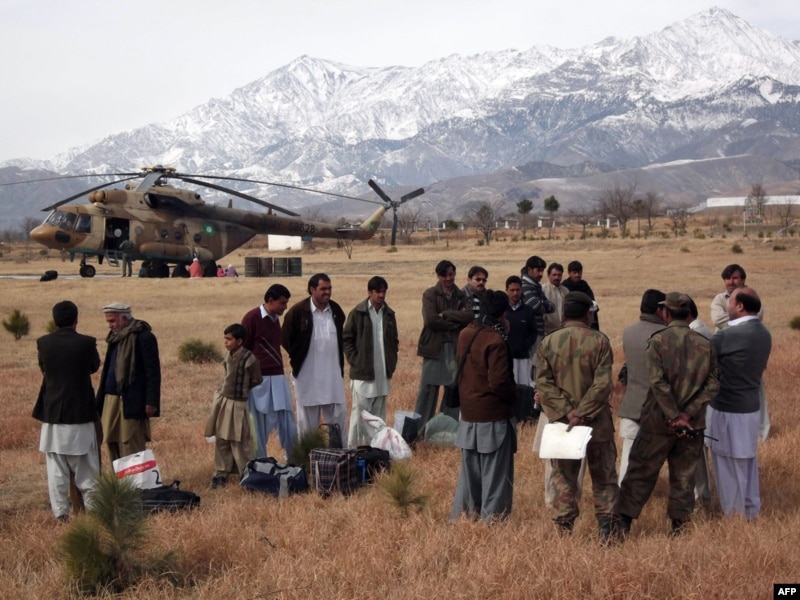
A helicopter ride was one of the fews ways out of Parachinar during the four-year seige.

A helicopter ride was one of the fews ways out of Parachinar during the four-year seige.

February 28, 2011
By Abubakar Siddique
A fragile peace is taking root in Pakistan's western Kurram tribal region after nearly four years of sectarian warfare between Shi'ite and Sunni Muslims.

Some have criticized a recent peace pact by saying that it is less about forging a lasting peace than about facilitating insurgents' infiltration into neighboring Afghanistan. But the local population appears committed to making it work. 

Success could have far-reaching implications. If peace is possible in a hotbed like Kurram, then it could serve as a model for millions suffering from war in other tribal areas.

'Many People Were Injured'

Resident Noor Janan's situation is typical. He lost his budding business in 2007 when clashes broke out between Shi'a and Sunnis in Parachinar. Rioting in the small border city, which serves as the headquarters of Kurram, soon devolved into sectarian war.

As the Sunni population of Parachinar was forced out, the city's mostly Shi'a population was hemmed in -- trapped by retreating Sunnis who blocked the main road to the outside and set siege on the city.

Janan's priorities changed remarkably. For the past four years his main obligation has not been to look after his wife and four children, but to man frontline trenches and care for the sick and the injured. 

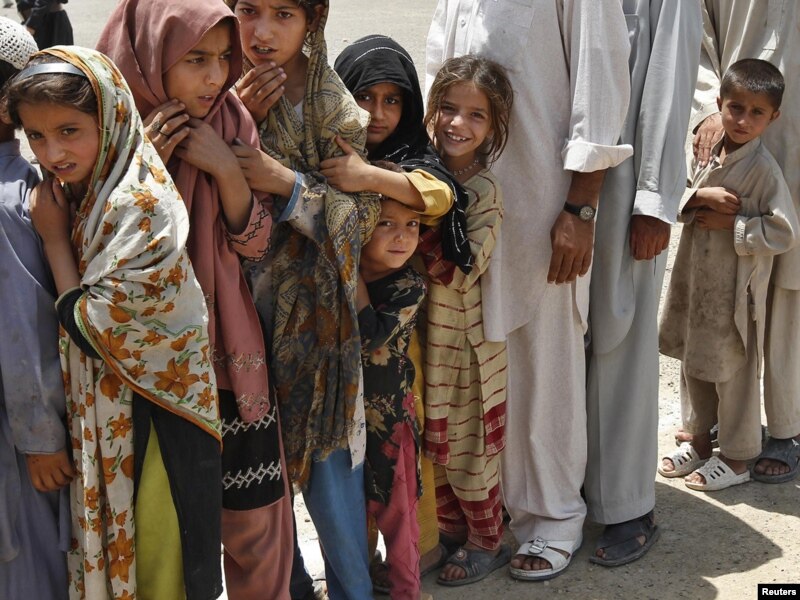
Children displaced by fighting stand in line and wait for handouts in 2010.
"Many people were injured and many houses were destroyed," he said. "I did all in my power to help my people."

Janan is Turi -- a tribe of 500,000 whose adherence to Shi'ite Islam makes it unique among Pashtuns. The Turis occupy a sliver of tribal territory known as the Parrot's Beak that extends westward across Afghanistan's eastern border. On the Pakistani side, Parachinar is positioned within striking distance of Kabul, just 100 kilometers to its east. 

For the most part, the Turis lived in harmony with neighboring Sunni tribes for centuries, with a handful of exceptions. In the 1980s, predominantly Sunni Afghan Islamist guerillas attempted to overrun the strategically important region. 

In 2007, a fierce sectarian war broke out when the Sunni Taliban attempted to conquer the Parachinar. More than 3,000 people have died and thousands more injured in the ensuing fighting. Some Sunnis blame Iran for the development, claiming the clerical regime supported and radicalized their Shi'a neighbors.

Both Sides Committed


Animosity remains high, but a cease-fire worked out in early February and backed by Islamabad offers proof that Shi'a and Sunni alike are committed to peace. 

Middle-aged businessman Munir Khan Orakzai, who represents the Sunni population of the lower half of Kurram in Pakistan's parliament, said that both sects realize that they have fought a useless cause that killed many innocent people. "There can be no logical end to this [sectarian violence]," he said. "That's why people concluded this agreement."

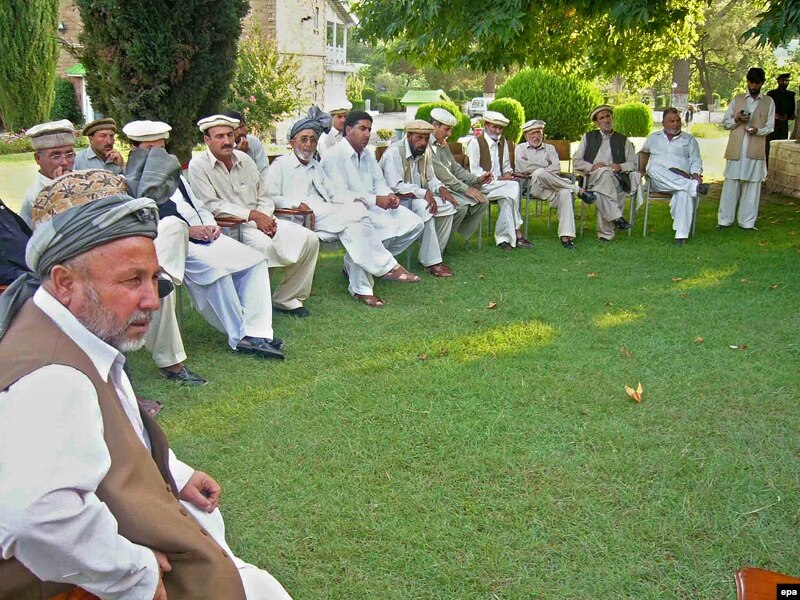
Tribal elders and government representatives attend a peace conference in Parachinar in 2008.
A peace agreement was signed before, in 2008, but it lacked government support and rival factions had one eye on possible military gains.

Under the new agreement, Islamabad is promising rehabilitation for the thousands of displaced families, and the deployment of additional troops to guard key routes. 

Work Of The Haqqanis?

Skeptics abound. Pakistani pundits suggested that the deal was worked out by the Haqqanis -- a large Pashtun family from Afghanistan whose elderly patriarch Jalaluddin Haqqani emerged as one of the most effective guerilla commanders in the 1980s.

His son, Sirajuddin Haqqani, now controls thousands of fighters and facilitates relations between Al-Qaeda Arabs, extremist Afghans, Pakistanis, and Central Asians out of his sanctuary in North Waziristan, which adjoins Kurram to the south. Considering the Haqqanis anti-Shi'ite bent and outsider status, any role in an agreement would be rejected by Kurram's Shi'a.

Sajid Hussain Turi, a young lawmaker representing the region's Shi'ite population in the Pakistani parliament, adamantly rejected any Haqqani role. "We, the Turis, have lost 1,200 people and more than 5,000 of our people were injured in this," he said. "There is no question of involving people in this process that would ultimately harm us."

Turi said that the weakened position of the Taliban, in disarray after years of military operations, opened the door to peace. He said that even local Sunni allies of the Taliban now see the futility of their military campaign. 

Key intermediaries have high hopes for sustainable peace in Kurram. Waris Khan Afridi, a respected tribal leader from the neighboring Khyber tribal district, was among the mediators who put in countless hours bringing the two sides together. 

Unforgettable Scene 

On February 5, Afridi led the first civilian convoy of hundreds of vehicles to mark the break of Parachinar's siege. He described an unforgettable scene of thousands of Sunni and Shi'ite villagers welcoming his entourage. "It was like they all were freed from prison that day," he said.

Now, Afridi said, Pashtun tribes in neighboring tribal valleys are poised to follow the Kurram example. "We have always said that force is not a solution for anything and that the military operations will not solve our problems," he said. 

"Peace in Kurram," Afridi said, "will positively affect all the tribal areas, the [neighboring] province of Khyber Pakhtunkhwa, and the whole country."
 

SOURCE: 

http://www.rferl.org/content/pakistan_tribal_peace/2323740.html

Visit

www.parachinar616.blogspot.com


Monday, February 28, 2011

Militants attack post with rockets in Darra


Monday, February 28, 2011

KOHAT: Militants fired two rockets at a security forces' post in the mountains of Bostikhel in Darra Adamkhel on Sunday. Sources said that the rockets were fired from an unknown direction but no human or material losses were caused. 

In retaliation, security forces also fired with heavy artillery at the hideouts of militants, but there was no word about any losses suffered by them. Our correspondent adds from Parachinar: A man was killed and another sustained injuries in a roadside blast in Taida village in Kurram Agency on Sunday, tribal sources said. 

The sources said the family of Wahab Ali, a member of the Hazara community in Parachinar, was on way from Taida village to Parachinar, the agency headquarters of Kurram Agency, when their vehicle hit an explosive device planted by militants on the roadside. Two persons identified as Hamid Hussain and Sadiq Ali sustained injuries in the explosion. They were rushed to the Agency Headquarters Hospital in Parachinar where Hamid Hussain succumbed to injuries.

SOURCE: 

http://www.thenews.com.pk/TodaysPrintDetail.aspx?ID=33512&Cat=2&dt=2/28/2011


Sunday, February 27, 2011

War and Peace

Pakistan Observer

War and Peace

Yahya Ahmad
Sunday, February 27, 2011, Rabbi-ul-Awwal 23, 1432
If history repeats itself, and the unexpected always happens, how incapable must Man be of learning from experience." George Bernard Shaw. Pakistani authorities for the last ten years have been fighting pitched battles against terrorist and militant outfits in North-West Pakistan. At least 3300 security forces personnel have laid down their lives since 2003. The terrorists have been utilizing guerilla tactics of inflicting losses, while trying to avoid a prolonged and direct confrontation. It is expected that, The Sate of Pakistan should now be well aware of the effectiveness of the peace accords that have taken place on numerous occasions, with these outfits. Judging from history, it is quite evident that these outfits have used these interim periods of peace, to recuperate and later strike whenever they have regained their capabilities. 

The examples are present in the peace accord of Swat and various truce agreements carried out in the Tribal Areas. The militants have always used these truce agreements to buy time, for preparing themselves for a stronger confrontation. The installation of parallel government and judicial system has been a norm for these militant groups. The summary judgments carried out by kangaroo courts, the harassment and killings of government supporters are how these elements exert their authority. With the success of military operations in the areas of Swat and South Waziristan, it is a verified assumption that peace, stability and prosperity cannot be reached unless the violent and subversive elements are not removed.

The breaking of sectarian violence in Upper and Lower Kurram regions in November 2007, engulfed Parachinar and the Peshawar-Parachinar road has been closed since then. According to some estimates, 2,000 people have died and more have fled their homes after clashes between the rival tribes, intensified. The Taliban have been widely known and condemned for inflaming and taking part in this violence. Recently, a truce has been reached among the warring tribes, which has been welcomed by the Tehrik-e-Taliban Pakistan (TTP). It is understandable that the peace in the area after three-four years of fighting is an encouraging step, especially for the local people. But the question is; can these banned outfits such as TTP be trusted for holding on to such a truce. The tacit approval which has been given by the state, points to the disturbing fact that there are still some vocal voices present in the policy circles, who still consider that these elements can be negotiated with. It should be pointed to them, that the TTP has not only been the part but the instigator of violence in the area. 

While peace is being restored in one part of the Tribal Area, the events, have taken a turn in Mohmand Agency. The operation against militant outfits in Mohmand Agency seems to be intensifying. According to the UN, up to 22000 people have already fled the area, while this number could rise to an estimated 90,000, by the end of February. This again is turning into an exodus and a humanitarian crisis for the country. A necessary evil, if terrorism is to be defeated in those areas. But it has to be followed up with a rehabilitation effort on war footings, a scale somewhat similar to the rehabilitation that, has taken place after Swat operation. It is imperative, that even if a truce agreement is reached, the terms should not be undermining the government's role in the area. The state apparatus should also keep a proper check on these groups and monitor their activities, while the agreement is in place. The government on the other hand, should use this time to establish their writ in the area.

The state should make effective strategies for a public outreach and also concentrate on the developmental projects in the area. Previously, these kinds of agreements have gone up in smoke because, these outfits gained unchecked strength and influence in the area and resultantly they shifted their goal posts, demanding more each time. They have also used these time periods, to exert their authority and establish a parallel government in the areas, based on their ideological perceptions. Providing the locals, with security for their lives and property, will boost their confidence. Taking the locals into confidence by the state is crucial for the implementation such agreements, in the spirit. The locals are the ones directly affected by the conflict and with the knowledge that the state has not left them on the mercy of these outfits, they will put their firm support behind the government.


SOURCE: 

http://pakobserver.net/detailnews.asp?id=78243

Visit

www.parachinar616.blogspot.com

http://parachinar616.wordpress.com/


Saturday, February 26, 2011

No end to attacks in Kurram

From The Newspaper Today

KOHAT, Feb 25: The local military fort has become a temporary shelter for people of Tora Ghundi and Tora Warai parts of Hangu, which have been turned into a battleground due to regular skirmishes between the troops and guerilla militants since 2006.

The militants had been attacking the region for several years now to regain control of the strategic region and expel the armed forces from Orakzai Agency and Kurram Agency, a local elder Inayatullah told Dawn on Thursday.

A couple of days ago five tribal children were killed and eleven others seriously injured when one of the six missiles fired at a security checkpost by militants hit a house in Tora Ghundi area.

According to the army publicity wing, militants fired seven rockets from the nearby mountains at a security checkpost in Tora Warai on Thursday. It said that the troops retaliated with artillery fire.

Officials said that the rockets were fired from an unknown side and they could not judge whether they had been launched from the mountains of Kurram Agency or Orakzai Agency. They said that the militants had increased attacks at the checkposts in the area. — Correspondent


SOURCE: 

http://www.dawn.com/2011/02/26/no-end-to-attacks-in-kurram-2.html


Thursday, February 24, 2011

Troops kill 10 terrorists in Kurram Agency

Daily Times


Troops kill 10 terrorists in Kurram Agency


Thursday, February 24, 2011


PESHAWAR: At least ten terrorists were killed and several others were wounded on Wednesday as security forces targeted terrorists' hideouts in parts of the Kurram Agency, a security official said. The security forces backed by gunship helicopters launched operation in two areas of Kurram Agency. Security sources pounded suspected terrorist hideouts. At least ten terrorists were killed and several were reportedly wounded and two terrorist hideouts and a vehicle were destroyed in the operation. app


SOURCE: http://www.dailytimes.com.pk/default.asp?page=2011%5C02%5C24%5Cstory_24-2-2011_pg7_7


Kurram: sacrificed at the global jihad altar —Dr Mohammad Taqi

Thursday, February 24, 2011
 

COMMENT: Kurram: sacrificed at the global jihad altar —Dr Mohammad Taqi

While the Pakistani media went hoarse over Raymond Davis, it conveniently ignored several other foreign thugs of the tallest order, operating with impunity inside Pakistan

As the world at large focused on events in the Arab world and Pakistanis remained preoccupied with CIA contractor Raymond Davis, a jirga composed ostensibly of tribal elders from Kurram Agency announced on February 3, 2011 a 'peace' accord between Shias and Sunnis in Parachinar, the headquarters of the Kurram Agency.

However, a closer look at the players involved in brokering the deal shows that what appears, prima facie, as a welcome solution to years of deadly impasse, is nothing but the Pakistani establishment's attempt to roll out its own version of the end game in Afghanistan. Never mind the jihadist history of reneging on deals, but without actually addressing the grievances of the Sunnis displaced from Parachinar or the Shias dislodged from Sadda, Jalamai and Chardewal — let alone restitution for the thousands killed and maimed on both sides — the deal is bound to end in failure. A senior Pashtun leader, Abdul Lateef Afridi, speaking to this writer, stated: "While the opening of roads is a welcome sign, unless the establishment changes its policy towards Afghanistan, the Kurram deal spells more trouble for the region...an agreement under the auspices of the Pakistani Pashtun elders may be the only route forward but, unfortunately, none of them were consulted."

The Kurram Agency's geo-strategic importance, with its proximity to the Paktia, Paktika and Khost provinces of Afghanistan on one hand and North Waziristan (NW) and Orakzai Agencies on the other, is well established. A neutral Kurram is imperative for the International Security Assistance Forces (ISAF) to stymie the influx of jihadists from this region into Afghanistan. Conversely, any sustained Taliban intervention into Afghanistan from the Pakistani side requires open access through upper Kurram. The contiguity of lower and central Kurram to NW and Orakzai can allow jihadists easy transit into Afghanistan. The northeast reaches of upper Kurram, adjoining the Tirah valley and the Tora Bora complex in the Spin Ghar mountain make for a retreat and retraction route for the jihadists — a conduit used to the fullest benefit by al Qaeda in 2001.

Pakistan has resisted US pressure to take action against the jihadists, especially of the Haqqani network, holed up in NW. However, with the July 2011 date for the start of the US drawdown from Afghanistan looming, the US demand has become urgent. The establishment remains convinced, however, that the US will leave Afghanistan sooner rather than later and therefore hedges its bets for the Kabul throne through its jihadist assets like the Haqqani network. The de facto leader of the network, Sirajuddin, has even been tipped as Pakistan's choice for Mullah Omar's eventual replacement. These assets, therefore, had to be moved to safe havens that could also double as bridgeheads, and Kurram fits that bill.

However, the Turi and Bangash tribes of Kurram refused to play ball with the agencies and their jihadist proxies, with whom they have significant religious doctrinal differences. An armed resistance by the Kurram tribes effectively denied the al Qaeda-Taliban a thoroughfare into Afghanistan, something that directly drew the wrath of Rawalpindi. The deep state then worked overtime to manufacture a sectarian crisis in Kurram in April 2007.

When attempts to gain a foothold in Parachinar failed, the establishment allowed a siege of upper Kurram by the Tehreek-e-Taliban Pakistan (TTP) and their al Qaeda overlords, blockading the Tal-Parachinar road. A humanitarian crisis in upper Kurram was averted only through the efforts of several Pashtun elders, who helped secure the long and arduous Parachinar-Khost-Gardez-Kabul-Peshawar route as an alternative. Cessna flights to Parachinar operated by the Peshawar Flying Club, though very expensive, were an added relief line. The reprieve thus gained by the Turis and Bangash of upper Kurram reinforced their resolve to fight on and continue denying sanctuary and conduit to the jihadists.

Watching the keystone of its plan for post-US Afghanistan unravelled by the ragtag Kurramis, the establishment decided, in the words of one Colonel Sajjad, to "teach the Turis a lesson". In September 2010, Colonel Tausif Akhtar of the Pakistani security forces announced closure of five border entry points to "clamp down on sectarian violence". The Kurramis were thus squished between the hammer and anvil of a state-sponsored double embargo. The state also interrupted the small aircraft sorties from Peshawar. The isolation of upper Kurram was now complete. Having pushed them against the wall, the establishment felt that the Kurramis might be amenable to a settlement.

While the Pakistani media went hoarse over Raymond Davis, it conveniently ignored several other foreign thugs of the tallest order, operating with impunity inside Pakistan. The media has portrayed a TTP commander, Fazl-e-Saeed of Uchat village (lower Kurram), as the guarantor of the Kurram deal. The fact, however, is that the Pakistani establishment imposed Khalil Haqqani (an uncle of Sirajuddin Haqqani) as an arbiter, as early as October 2010 (as noted then in this column). Khalil Haqqani was the most influential jihadist involved in getting the February 3 deal off the ground.

The irony is that while Pakistani intelligence services and that drama queen of a foreign minister were wailing about a CIA man running amok in Lahore, Khalil Haqqani was conducting a jirga a stone's throw away from Islamabad in Bhara Kahu, where he reportedly maintains a business concern. These meetings were attended by some six Shia Kurramis, including Haji Aun Ali, Laiq Hussain, Captain Yousaf, Councillor Iqbal Hussain and MNA Sajid Turi. MNA Munir Orakzai and Senator Rashid Ahmed were among the eight Sunnis representing lower and central Kurram. Federal Interior Minister Rehman Malik, reportedly, also attended the meetings with Khalil Haqqani — a man declared a 'Specially Designated Global Terrorist' by the US earlier this month.

The Haqqani network has freely used the Pir Qayyum, Sateen and Shasho camp (an old hub of Rasul Sayyaf in the 1980s) areas of lower Kurram but really needed open access to its bases in Tari Mangal, Mata Sangar, Makhrani, Wacha Darra and Spina Shaga in upper Kurram to launch attacks into Afghanistan in the upcoming summer fighting. By coercing the Kurramis into accepting the writ of the Haqqani network, the Pakistani establishment has cast its lot with the jihadists.

It remains to be seen if this strategy to use upper Kurram against the US will work. But for now the deep state has sacrificed Kurram at the altar of global jihad.

The writer can be reached at mazdaki@me.com


SOURCE: http://www.dailytimes.com.pk/default.asp?page=2011%5C02%5C24%5Cstory_24-2-2011_pg3_2